

When most people think about investing in real estate, they picture buying land, building a house, or purchasing an apartment to rent out. For many Ghanaians, however, these opportunities seem out of reach because of the significant capital required. But what if you could invest in real estate without buying an entire property?
This is the idea behind Real Estate Investment Trusts (REITs), a concept that has transformed property investment in many parts of the world and is now gaining attention in Ghana.
Recently, the Securities and Exchange Commission (SEC) renewed calls for the growth of REITs as part of efforts to deepen Ghana's capital market, attract investment into the property sector, and create new opportunities for both institutional and individual investors.
So, what exactly is a REIT, how does it work, and why should every Ghanaian interested in real estate understand it?
What Is a REIT?
A Real Estate Investment Trust (REIT) is a company or investment fund that owns, operates, finances, or manages income-generating real estate. Instead of purchasing an entire building, investors buy units or shares in the Real Estate Investment Trust (REIT). The money collected from many investors is then used to acquire or develop properties that generate income.
These properties may include:
Residential apartments
Office buildings
Shopping malls
Hotels
Warehouses
Student accommodation
Hospitals
Industrial parks
Mixed-use developments
As these properties generate rental income or increase in value, investors receive returns based on the number of units they own. In simple terms, a REIT allows many people to collectively invest in real estate without owning or managing the properties themselves.
How Does a REIT Work?
Imagine a modern apartment complex valued at GH₵100 million. Rather than one investor purchasing the entire property, a REIT allows thousands of investors to contribute smaller amounts of money.
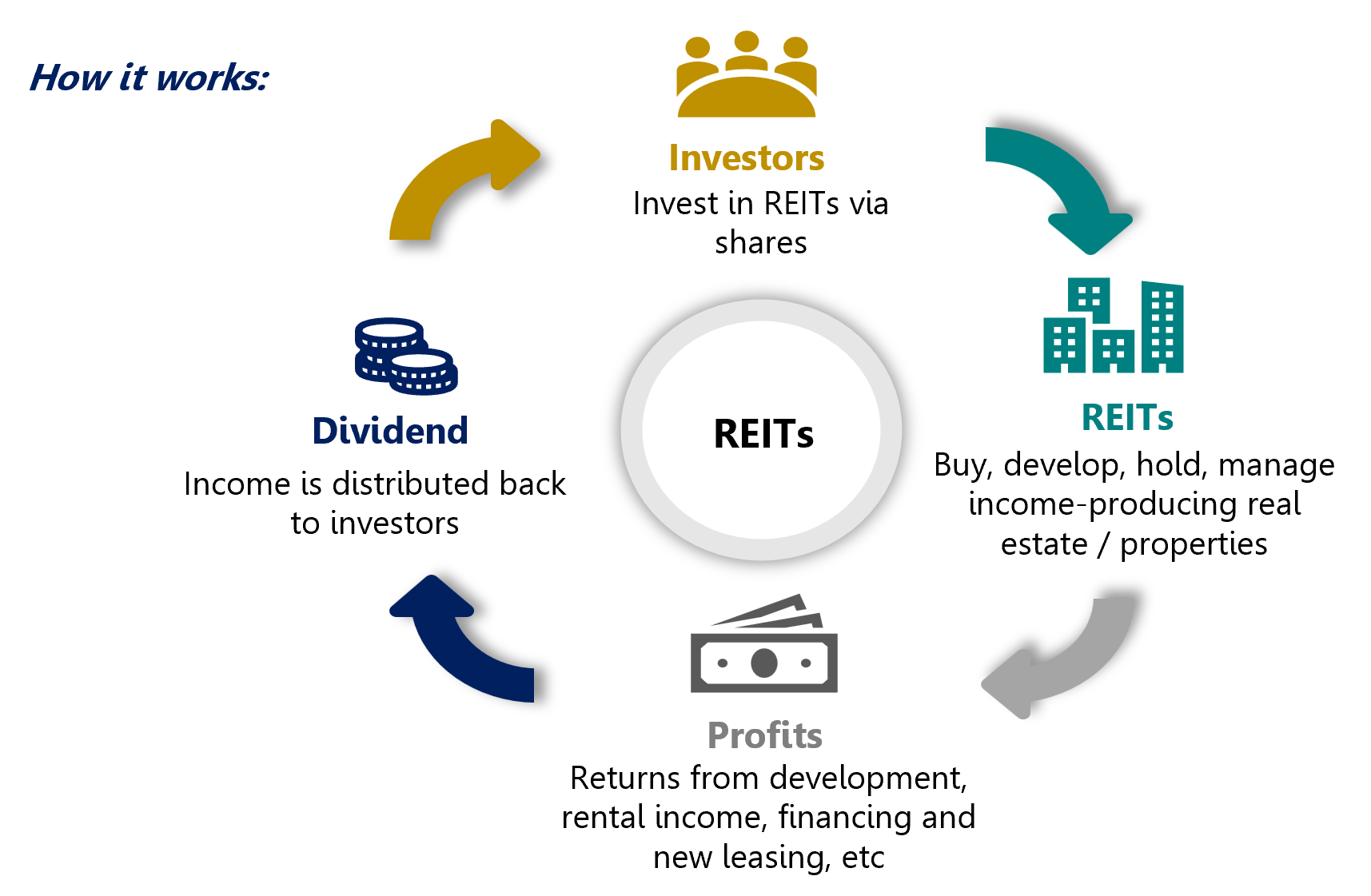
The REIT acquires the apartment complex, manages the property, collects rent from tenants, maintains the building, and distributes a portion of the rental income to investors.
The investor does not have to:
Find tenants
Collect rent
Repair leaking roofs
Handle maintenance
Chase rent defaulters
Manage property staff
Everything is handled by professional fund managers.
A Simple Example
Let's say a REIT owns several office buildings and shopping centres across Accra and Kumasi.
Every month, businesses occupying these buildings pay rent. That rental income is collected by the REIT, after deducting operating expenses, the remaining income is distributed among investors according to the number of units they own. As the value of the properties grows over time, investors may also benefit from capital appreciation.
Why Are REITs Important?
Real estate has traditionally been viewed as an investment reserved for people with substantial financial resources. Buying land, constructing buildings, or purchasing apartments often requires hundreds of thousands or even millions of Ghana cedis.
REITs change that.
They allow ordinary individuals to participate in the property market with significantly lower investment amounts than would be required to buy a property outright. This makes real estate investment more accessible to a broader segment of the population.
Why Is the SEC Promoting REITs?
The Securities and Exchange Commission (SEC) believes REITs can play an important role in strengthening Ghana's financial and real estate sectors. According to the SEC, expanding REITs could:
Mobilize long-term investment into real estate.
Increase access to funding for housing and commercial developments.
Attract pension funds and institutional investors.
Encourage diaspora investment.
Deepen Ghana's capital market.
Create new investment opportunities for ordinary Ghanaians.
Rather than relying solely on bank loans, developers could access capital through professionally managed investment funds. This could help finance more housing projects, commercial buildings, and infrastructure developments.
How Do Investors Make Money?
There are generally two ways investors earn returns from REITs.
Rental Income
Properties owned by the REIT generate rental income from tenants.
A significant portion of that income is distributed to investors as dividends.
Capital Appreciation
As property values increase over time, the value of the REIT may also grow.
If an investor decides to sell their units later, they may earn a profit if the value has appreciated.
Why REITs Could Benefit Ghana's Housing Sector
Ghana continues to face a housing deficit estimated at more than 1.8 million housing units.
One of the biggest challenges facing developers is access to affordable, long-term financing.
Many projects struggle to secure adequate funding. REITs can help bridge this financing gap by pooling capital from many investors and directing it into real estate development. This could support:
Affordable housing projects
Student accommodation
Rental housing
Commercial developments
Mixed-use communities
Urban regeneration projects
Ultimately, increased investment could contribute to expanding Ghana's housing supply.
What Are the Advantages of Investing in a REIT?
REITs offer several potential benefits.
Lower Barrier to Entry
Investors do not need to purchase an entire property to gain exposure to real estate.
Professional Management
Experienced professionals manage the properties, reducing the burden on investors.
Diversification
Instead of investing in a single building, a REIT may own multiple properties across different sectors and locations.
This spreads investment risk.
Passive Income
Investors may receive regular dividend payments without actively managing property.
Liquidity
Depending on how the REIT is structured, investors may find it easier to buy or sell units than selling physical property, which can take months.
Are There Risks?
Like every investment, REITs are not risk-free. Potential risks include:
Declining property values
Lower rental occupancy
Economic downturns
Interest rate changes
Reduced dividend payments
Market fluctuations
Returns are never guaranteed. Investors should understand how a REIT operates before investing and seek professional financial advice where necessary.

How Are REITs Different from Buying Property?
Buying a property gives you direct ownership and control. You decide how the property is used, who rents it, and when it is sold but you also bear the costs of maintenance, vacancies, repairs, taxes, and management.
With a REIT, you own a share of a professionally managed portfolio of properties. You don't make day-to-day decisions, but you also avoid the responsibilities that come with being a landlord.
Both approaches have advantages. The right choice depends on an investor's financial goals, available capital, and appetite for risk.
What Does This Mean for Ghana?
As Ghana's real estate market continues to grow, new financing models will become increasingly important. REITs have the potential to democratize property investment, allowing more people to participate in the sector while providing developers with alternative sources of capital.
For pension funds, institutional investors, and members of the Ghanaian diaspora, REITs could also offer a regulated way to invest in the country's growing property market. While the REIT market in Ghana is still developing, the SEC's renewed focus suggests that these investment vehicles could play a much larger role in the years ahead.
If properly regulated and supported, REITs could help finance housing, stimulate economic growth, deepen the capital market, and make real estate investment more accessible to ordinary Ghanaians. The future of Ghana's property sector may not depend solely on who can afford to buy a house, it may also depend on creating smarter ways for more people to invest in one.
Key Takeaways
A REIT allows people to invest in real estate without buying a property outright.
Investors buy units or shares in a professionally managed real estate fund.
REITs generate income primarily through rent and property appreciation.
The SEC believes REITs can attract more investment into Ghana's property sector.
REITs could help finance affordable housing and other real estate developments.
Like any investment, REITs come with both opportunities and risks.


